Splunk.com Redesign
Redesigned Splunk.com from the ground up — re-architecting navigation, rethinking page narratives, and creating 25+ reusable templates that drove double-digit gains in conversions and engagement across C-Suite, Tech Exec, and Practitioner journeys.
Role
Lead UX Designer
Duration
2021–2022
Agency
Clear Digital (previously WebEnertia)
Splunk.com Redesign
Redesigned Splunk.com from the ground up — re-architecting navigation, rethinking page narratives, and creating 25+ reusable templates that drove double-digit gains in conversions and engagement across C-Suite, Tech Exec, and Practitioner journeys.
Role
Lead UX Designer
Duration
2021–2022
Agency
Clear Digital (previously WebEnertia)
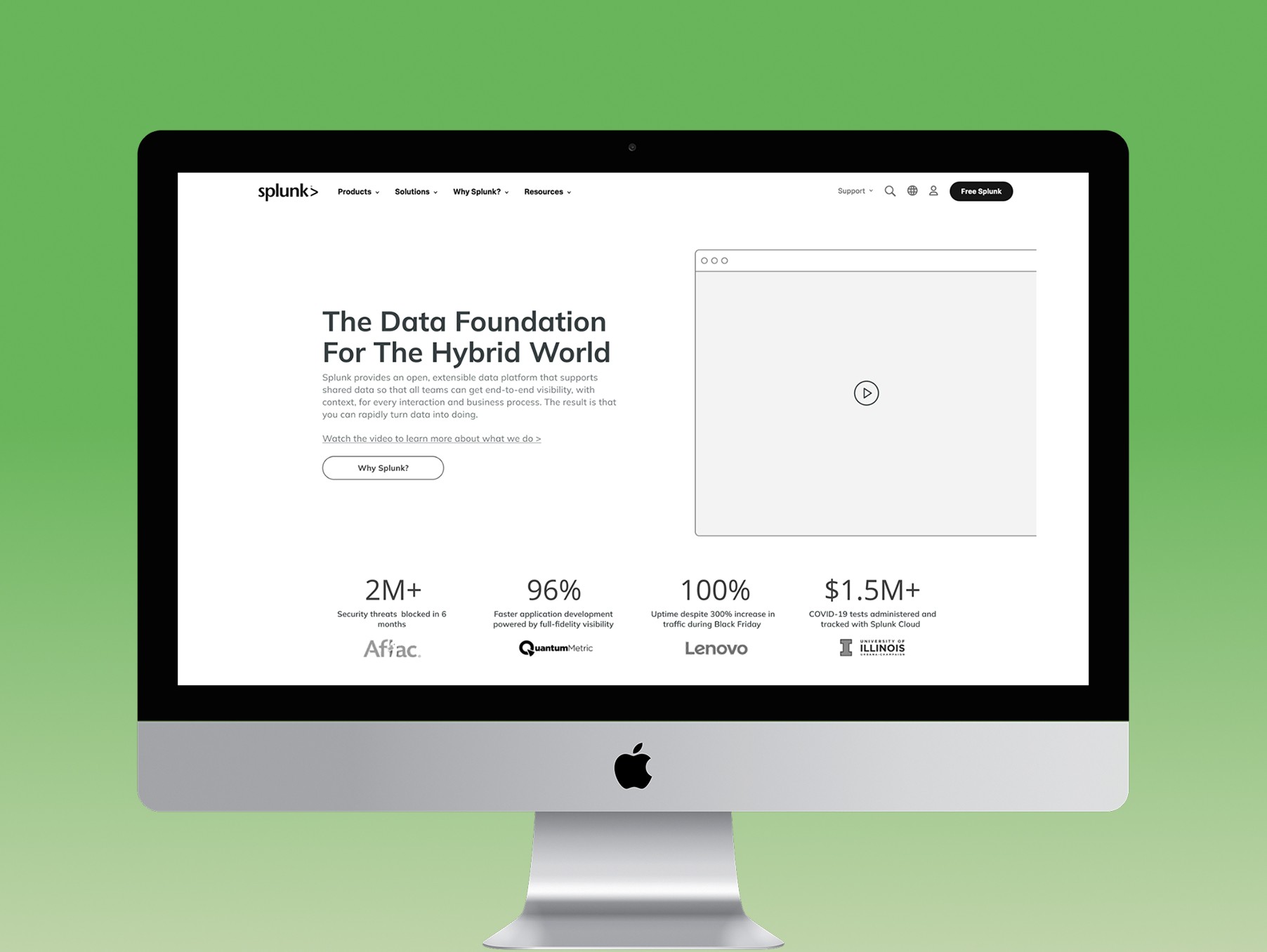
Context
Splunk needed more than a facelift—they needed a website that could scale with their evolving portfolio, clarify complex offerings, and better serve three very different audiences: C-Suite, Tech Executives, and Practitioners.
As Lead UX Designer, I partnered with the client and agency to architect a new narrative framework, navigation system, and scalable set of templates that unified the story while giving each persona a clear path forward.
My Role
Led UX strategy, IA, and narrative design
Designed user flows, journeys, and sitemaps
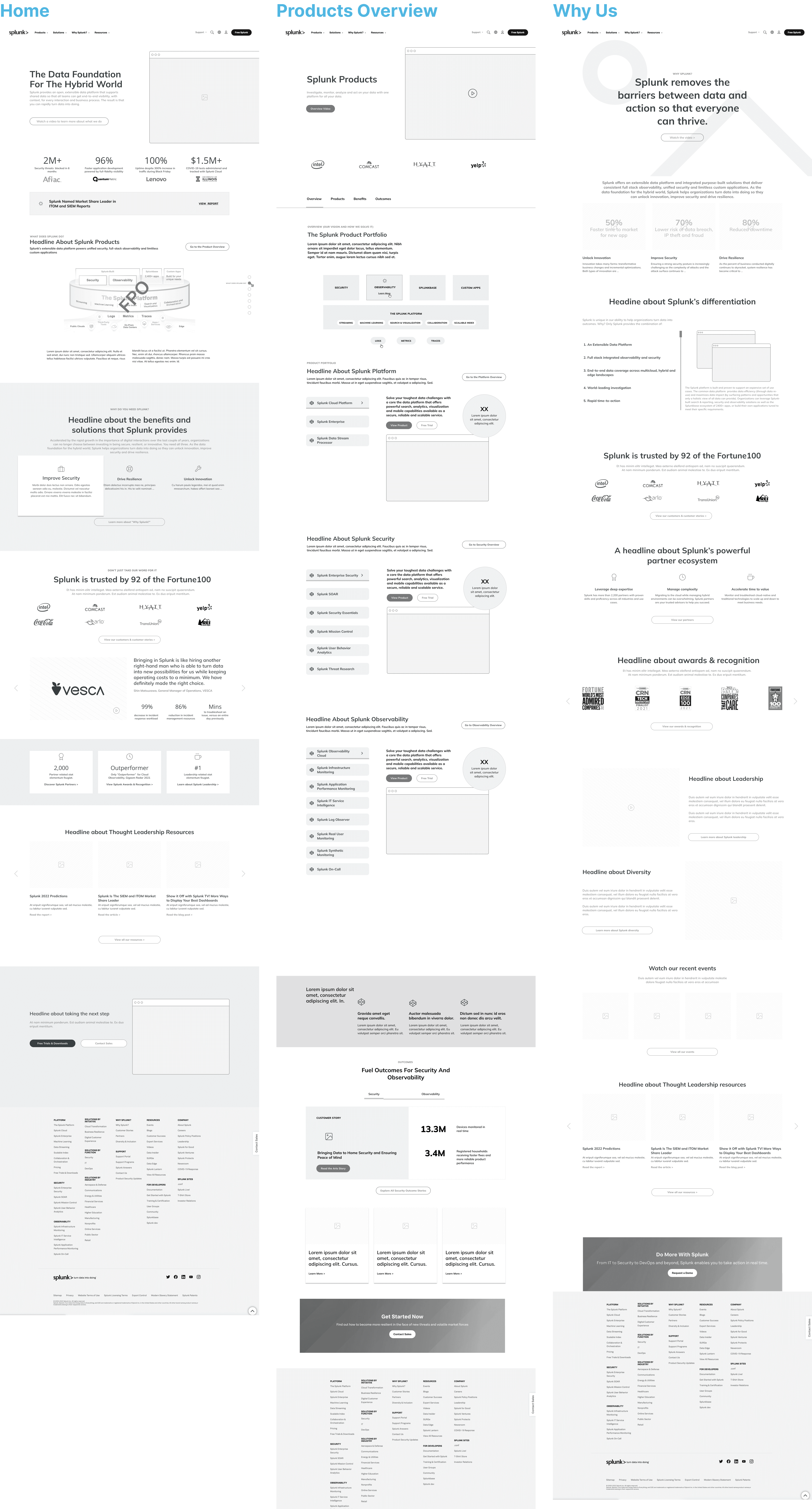
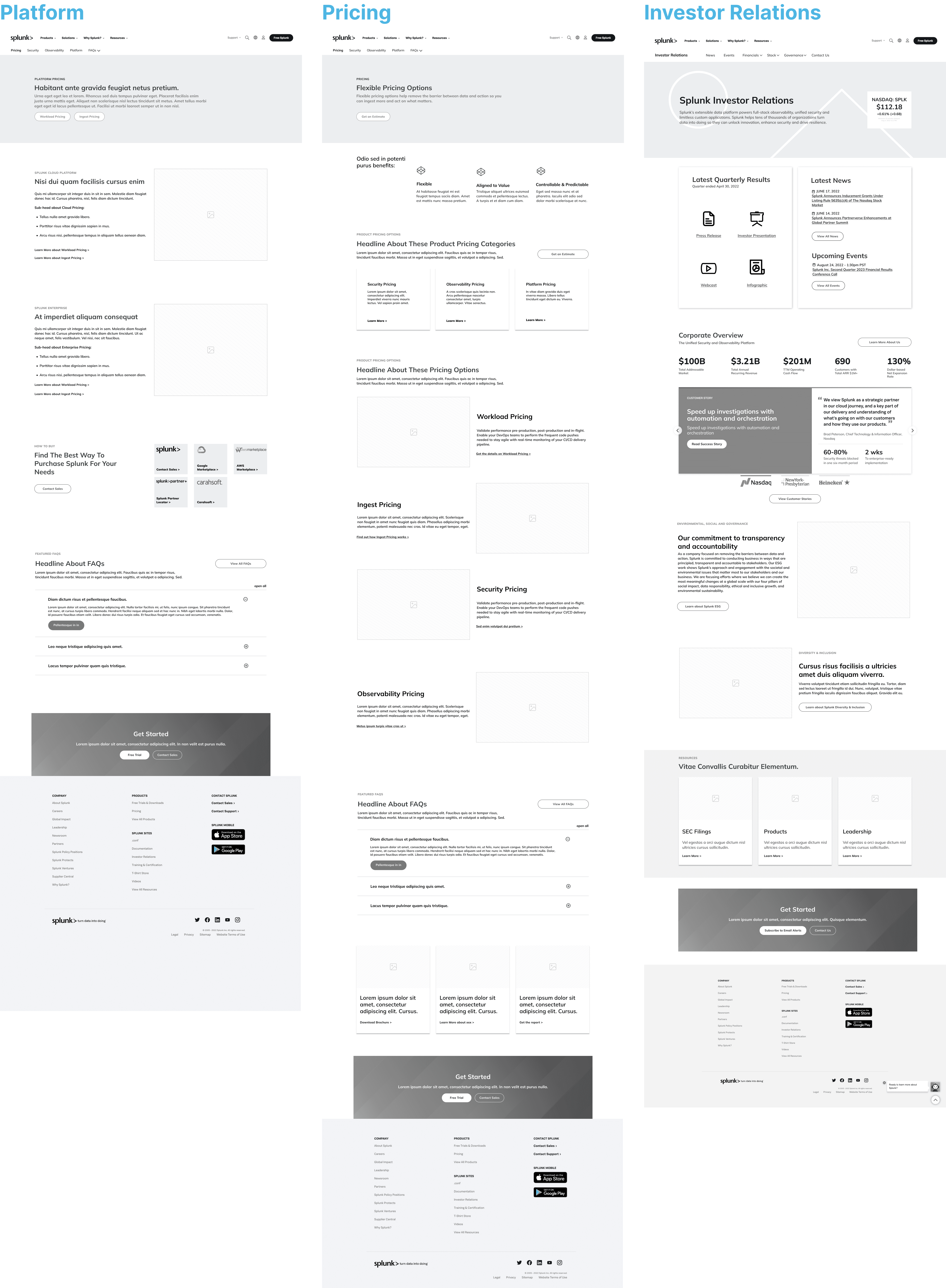
Designed wireframes for homepage, products, solutions, and use cases
Collaborated closely with Splunk stakeholders to ensure alignment
Mentored a junior designer throughout
Extended UX support into additional sections such as training, global impact, and careers to ensure consistency across the site.
The Challenge
Fragmented Navigation | Confusing Hierarchy | Outdated | Low |
|---|---|---|---|
Difficult for users to find relevant solutions across the complex | Product organization obscured Splunk's breadth of offerings and capabilities. | Failed to differentiate from competitors like Datadog, Elastic, and Palo Alto Networks. | High bounce rates on key landing pages with conversions lagging behind targets. |
Approach
Discovery & Research
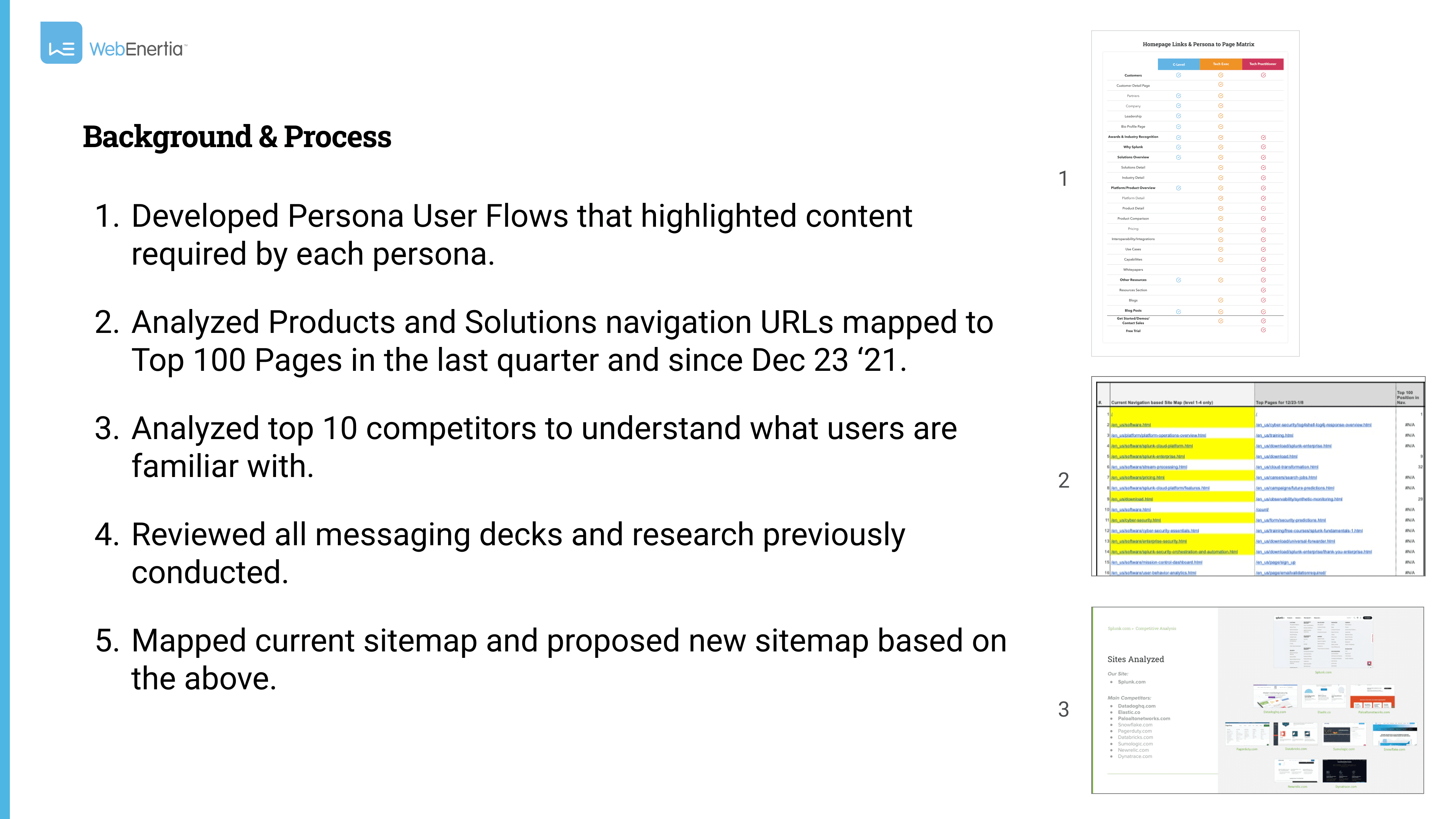
Competitive benchmarking across 10+ enterprise tech sites
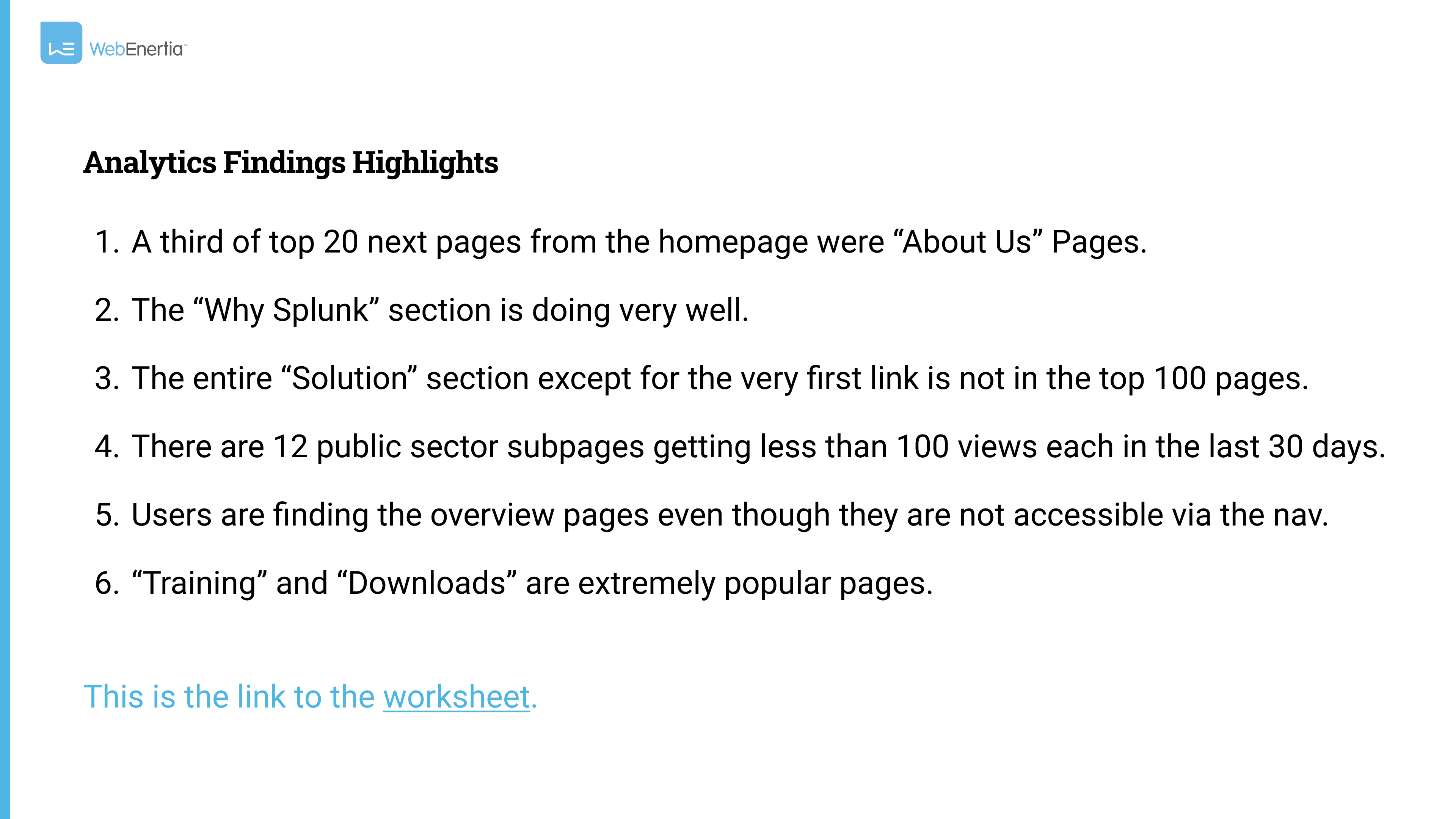
GA4 data analysis to pinpoint drop-offs and friction points
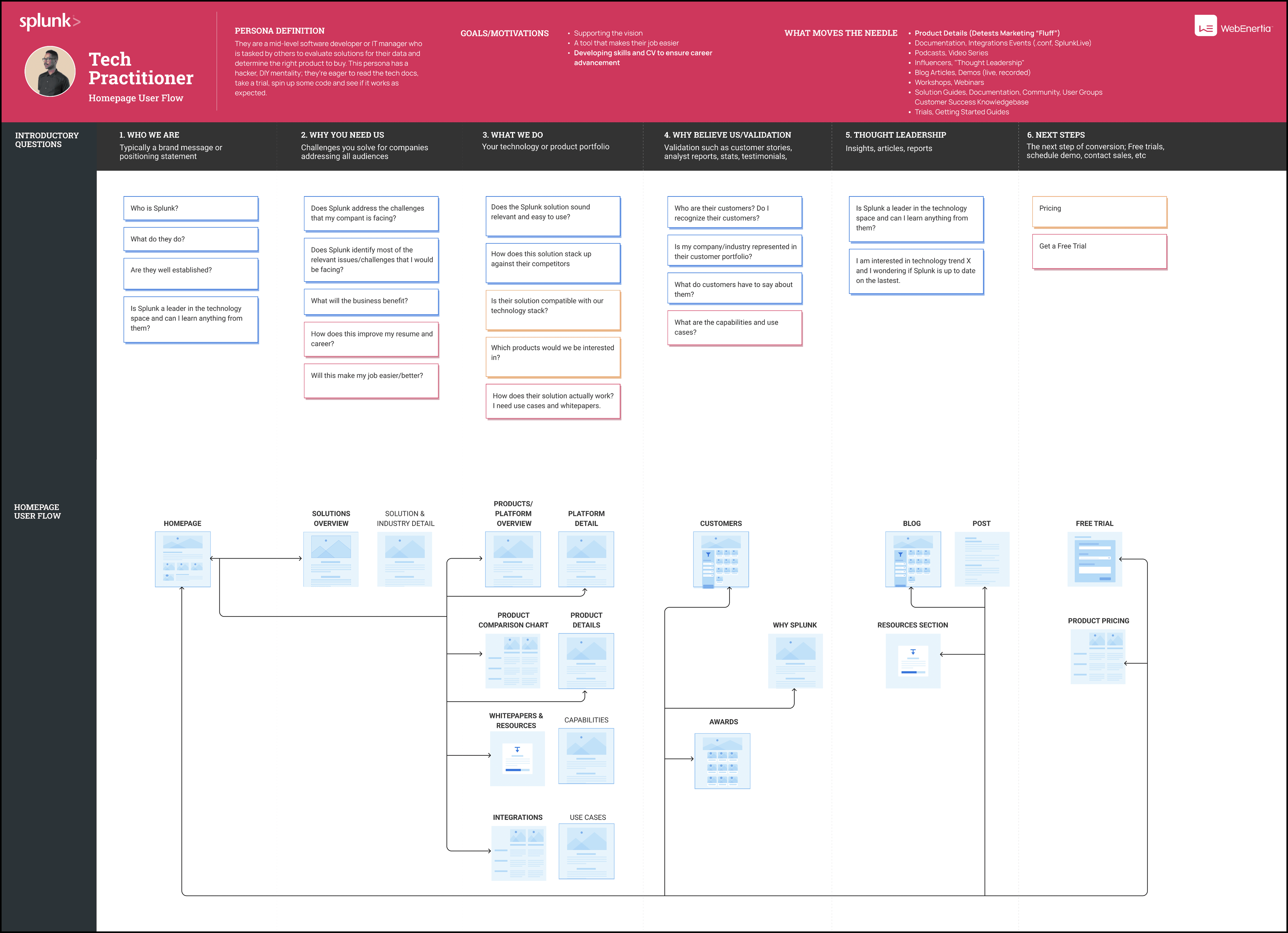
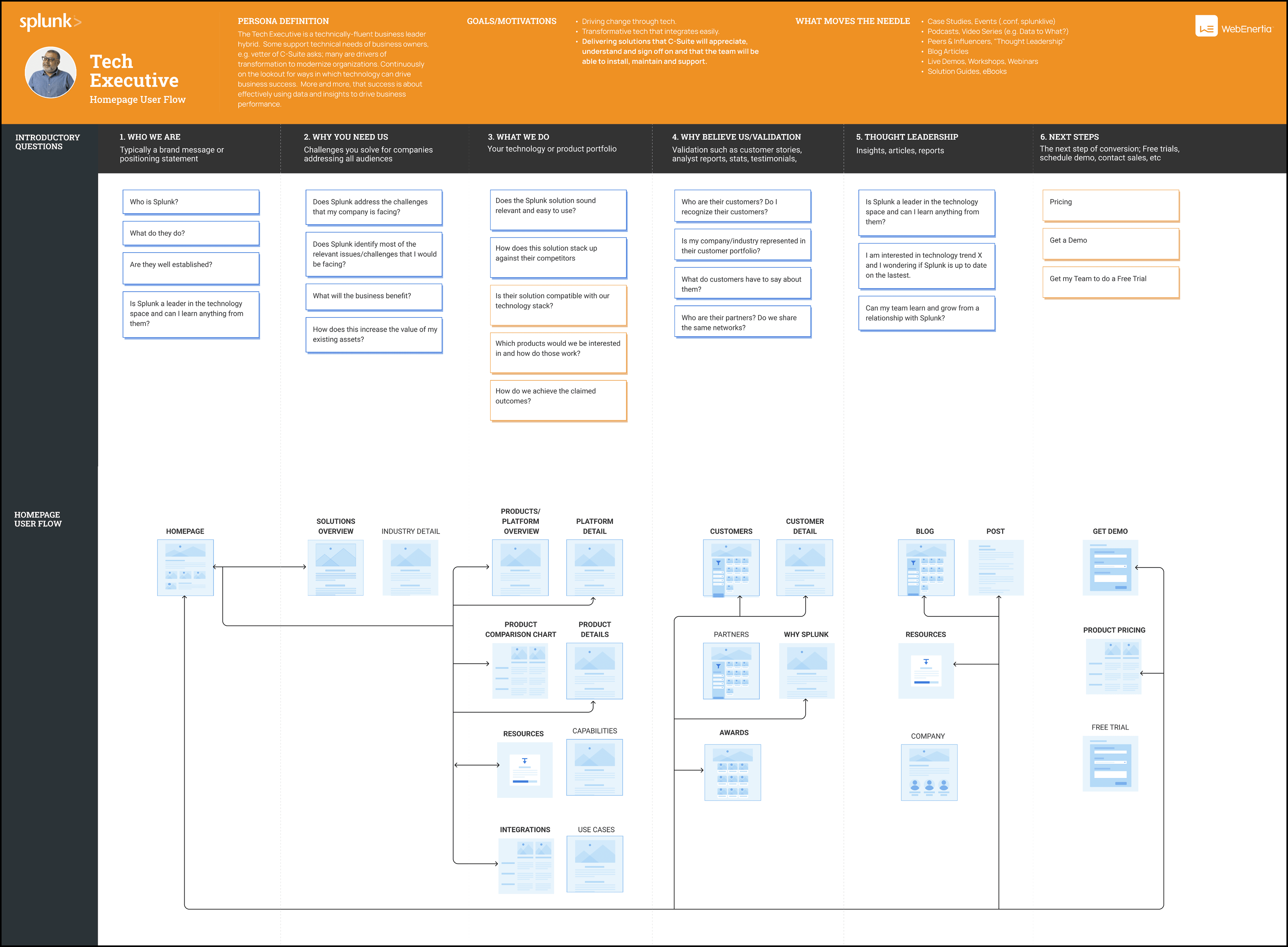
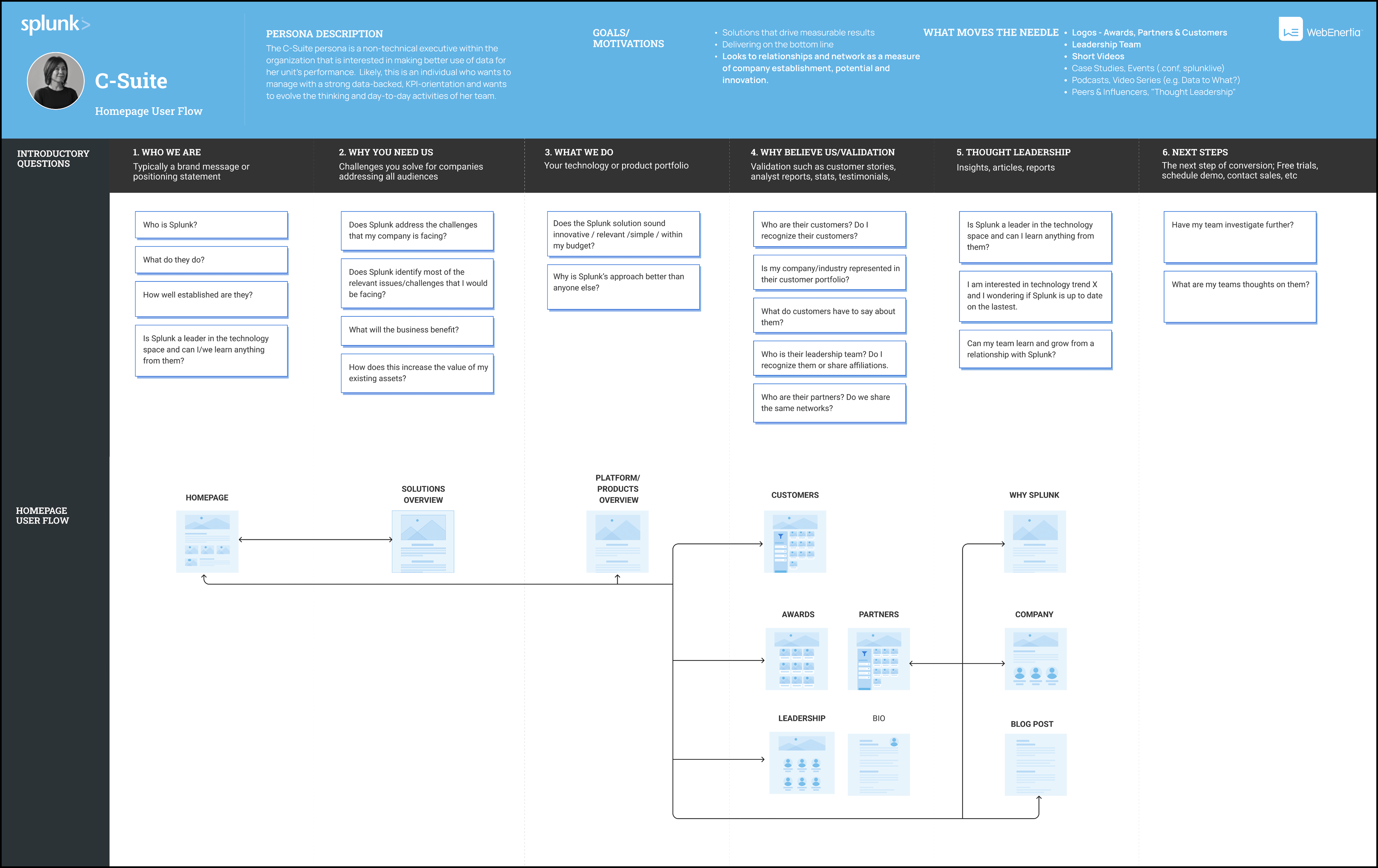
Mapped personas to decision maker, influencer, and end user journeys, identifying questions at each stage of the buying cycle. This framework shaped the IA and ensured every core page had a clear role.
2. Information Architecture & Navigation
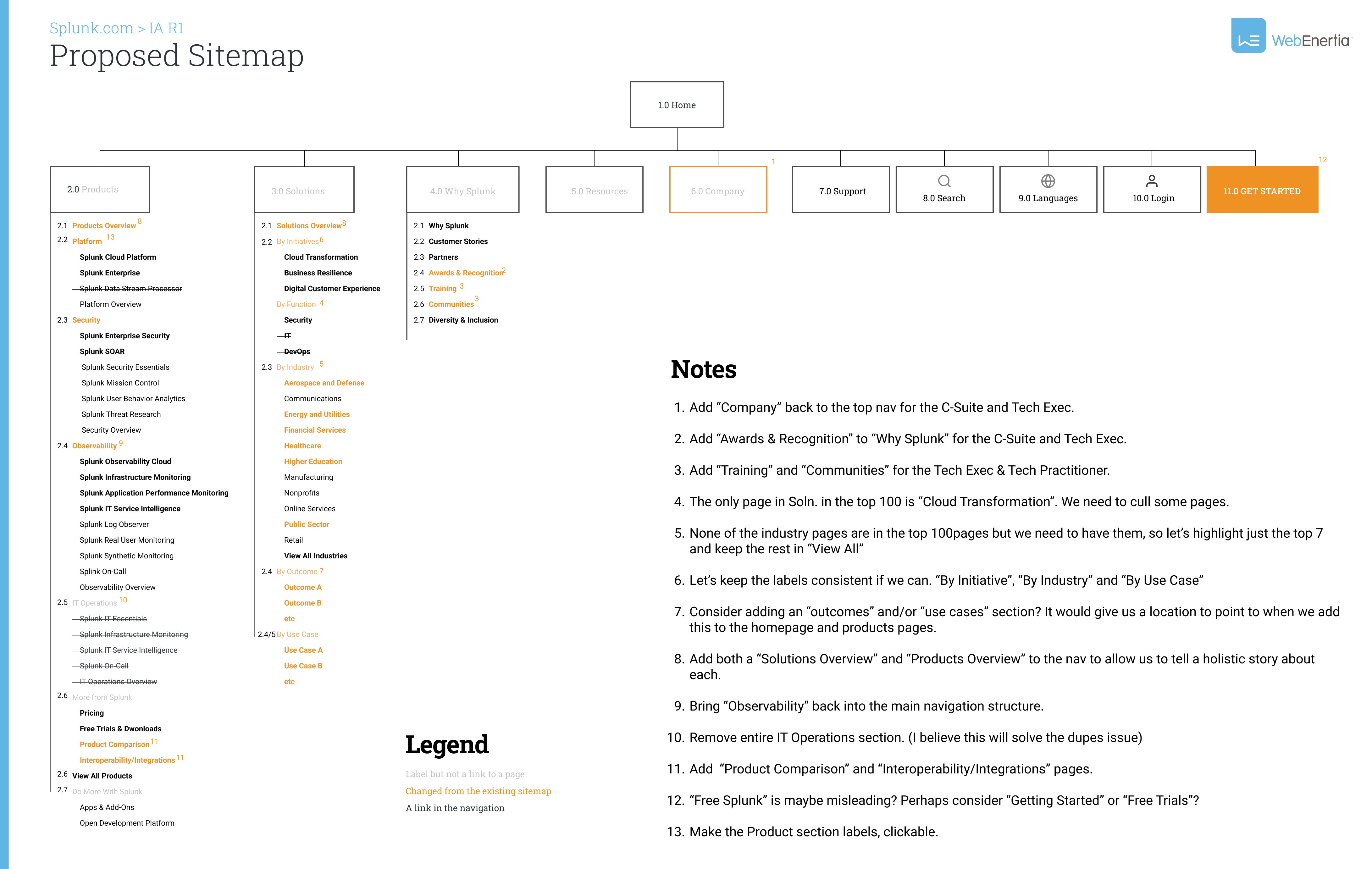
Re-architected global navigation into clear “Products” and “Solutions” groupings.
Built a sitemap that supported top journeys: by industry, use case, and technology.
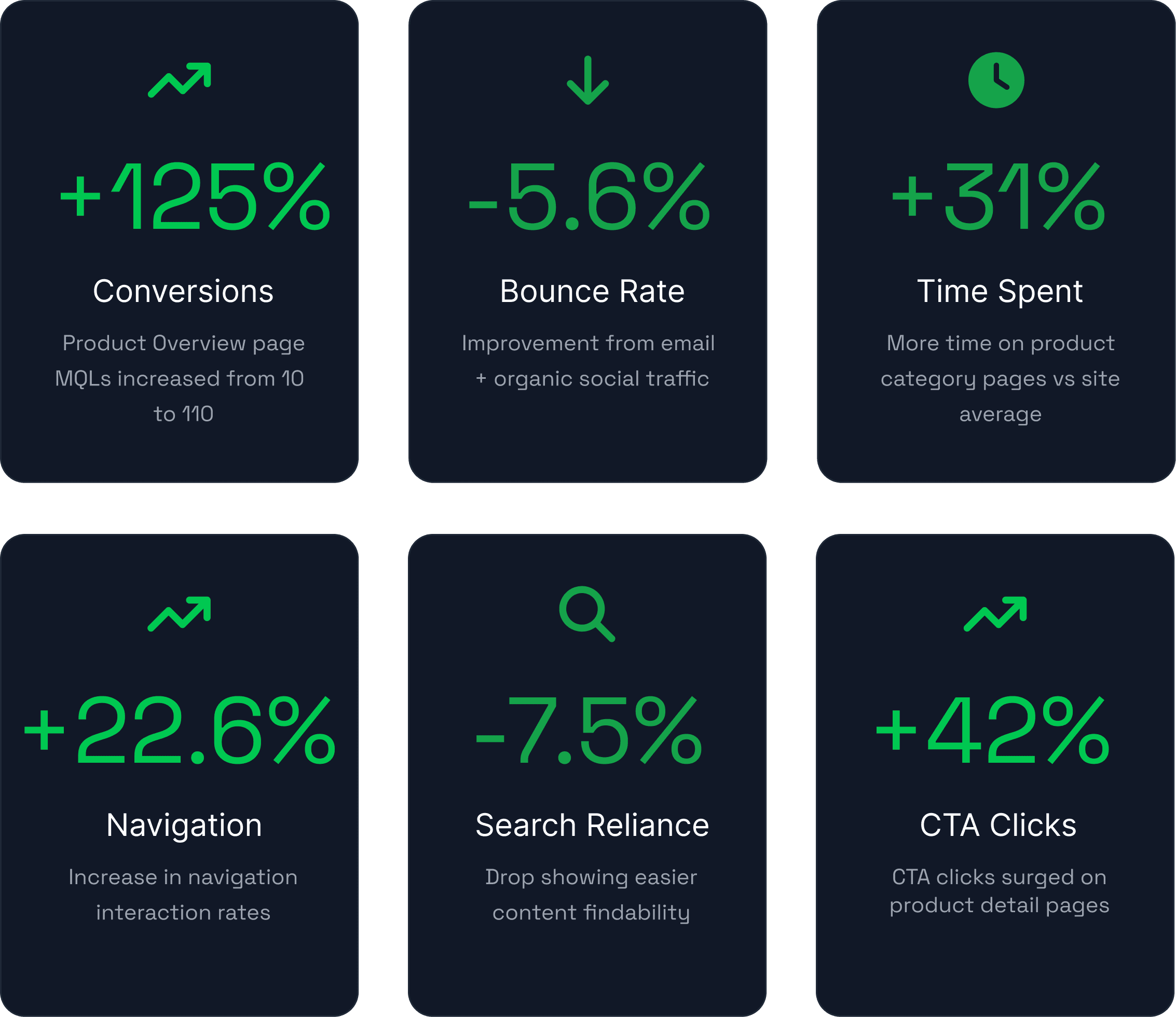
Reduced clutter and improved findability (search reliance dropped by 7.5%), grounding the IA in real user behavior by aligning with Splunk’s top 100 most-visited pages.
3. Narrative & Template Design
Designed 25+ templates (homepage, product overview, categories, detail, solutions, use cases, etc) and re-crafted page-level narratives to align Splunk’s evolving platform story with user needs.
Integrated “marketecture” storytelling elements while balancing business value and technical depth.
Crafted pathways for all three personas: high-level storytelling for execs, technical detail for practitioners, and outcome-driven validation for decision makers.
4. Testing & Iteration
Iterated layouts to improve clarity, readability, and CTA performance based on 40+ user tests across homepage, product, and solution templates.
Phased rollout across April–June 2022 with immediate metrics tracking.
Results
The refresh delivered measurable impact within 90 days post-launch:
Key Takeaways
Clarity for Every Persona | Scalable, Flexible Framework | Proven Impact |
|---|---|---|
A strong IA and persona-driven narrative created a clearer buyer journey across execs, practitioners, and hybrid decision makers, mapped to their role in the decision process. | Scalable templates and consistent narratives allowed Splunk to expand quickly into new product, solution, and secondary pages (training, global impact, careers) without reinventing layouts. | Early metrics showed double-digit gains in conversions and engagement, validating the redesign’s strategic impact |